Fashion jewelry fails in the market for two reasons: the finish wears off, or the metal underneath disagrees with someone's skin. Both are decided before the plating bath — by the base metal you choose. This is how we talk to brand buyers about that decision at our Yiwu factory: what zinc alloy, brass, copper and stainless steel are genuinely good at, what each one costs you in tooling and reorder flexibility, and where each of them is the wrong answer.
The short answer
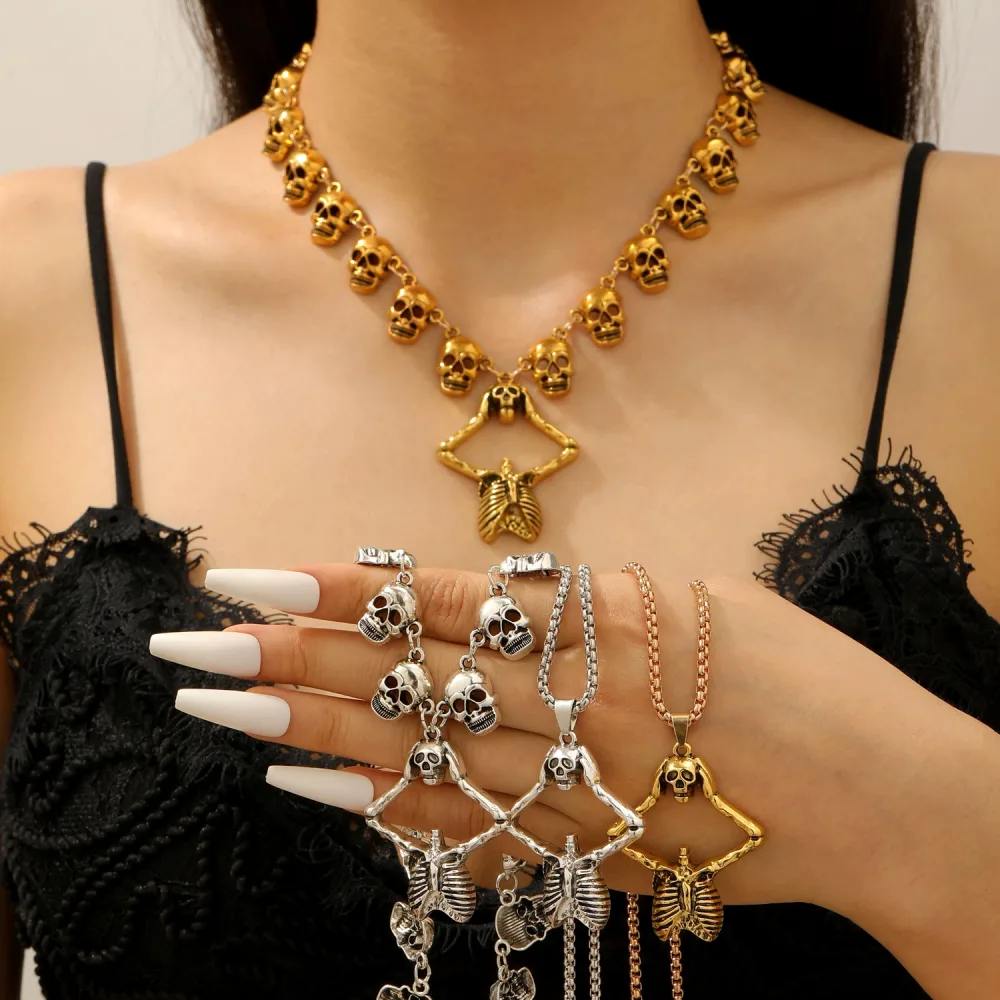
- Zinc alloy (Zamak 3 / Zamak 5) — cheapest per piece at volume, holds the sharpest cast detail (skulls, filigree, crosses, textured chains), fastest to sample. Weak against drops and against sweat. Our default for seasonal and statement pieces.
- Brass — the best all-rounder: takes polish and plating better than alloy, can be re-plated, and spin-forms into clean rings and bands. Must be specified lead-free for the EU and US markets.
- Copper — soft and inexpensive, superb as a base for enamel work, but it moves and tarnishes quickly if unplated. Mostly light-gauge and decorative pieces.
- Stainless steel (304 / 316L) — the only one of the four you can honestly sell as sweatproof and safe for sensitive skin or pierced body jewelry. It cannot be die-cast into fine detail, and it takes PVD colour rather than classic gold electroplate.
If you are building a fast-turning, trend-led catalog at entry price: alloy. If you want a small "wear it in the shower" line: stainless steel. If you want a mid-price collection with the widest choice of finishes and the easiest repairs: brass.
What the base metal actually decides
Five things change with the metal, and none of them show up in a product photo:
- How much detail survives. Die-cast alloy reproduces an engraved line of about 0.4 mm; stamped or laser-cut stainless cannot.
- How plating bonds. Alloy is micro-porous and needs a barrier strike before any gold tone; stainless needs an activation step or the colour lifts at the edges.
- How it behaves against skin. Perspiration is mildly acidic (roughly pH 4.5–6.5) and warm — that combination, not water, is what eats a cheap finish.
- Whether a reject can be repaired. Brass and copper strip, re-polish and re-plate. Cracked alloy is scrap.
- What compliance costs you. Nickel release, lead and cadmium limits bite differently depending on which metal you start with.
The four metals side by side
| Base metal | Detail it holds | Plating route | Sweat & skin | Repairable | Cost index |
|---|---|---|---|---|---|
| Zinc alloy | Excellent — die cast, sharpest relief | Copper strike → gold/rhodium tone → top coat | Weak unplated; good with e-coat | No — brittle, cracks on impact | 1.0 |
| Brass | Good — machined, spun, cast | Direct plate, widest colour choice | Medium; needs a barrier for sensitive ears | Yes — strip and re-plate | 1.2–1.4 |
| Copper | Good for enamel, soft for detail | Plate or leave bare with lacquer | Reacts with skin; always coat it | Yes | 1.1–1.3 |
| Stainless 304/316L | Limited — stamped, CNC, laser | PVD only (gold, rose, gunmetal, black) | Strong; the hypoallergenic pick | Re-polish only | 1.6–2.2 |
The cost index is relative, comparing our own lines at the same design complexity and 1,000-piece quantity, plating included. It is not a price list — send a drawing and you get real numbers.
Zinc alloy: why most costume jewelry is made of it
Zamak is a zinc alloy with roughly 4 % aluminium and, in Zamak 5, about 1 % copper. It melts at a low temperature, pours into a steel mould in seconds, and comes out with crisp edges — which is why everything from gothic skulls to textured chain links is cast in it. Tooling is cheap and samples are fast, so it is the natural choice when you are testing designs.
Where it hurts: alloy is porous at the microscopic level, so a gold tone laid straight onto it will bloom and dull quickly unless a copper or nickel barrier strike goes down first. It is also brittle. A pendant that is dropped on a shop floor can crack at the bail, and a crack under a thin finish becomes a dark spot within weeks.
- Use it for: statement pieces, seasonal drops, layered chains, cast detail, anything you plan to replace rather than repair.
- Avoid it for: body piercing jewelry, everyday earrings for sensitive ears, waterproof claims, heavy items that see impacts.
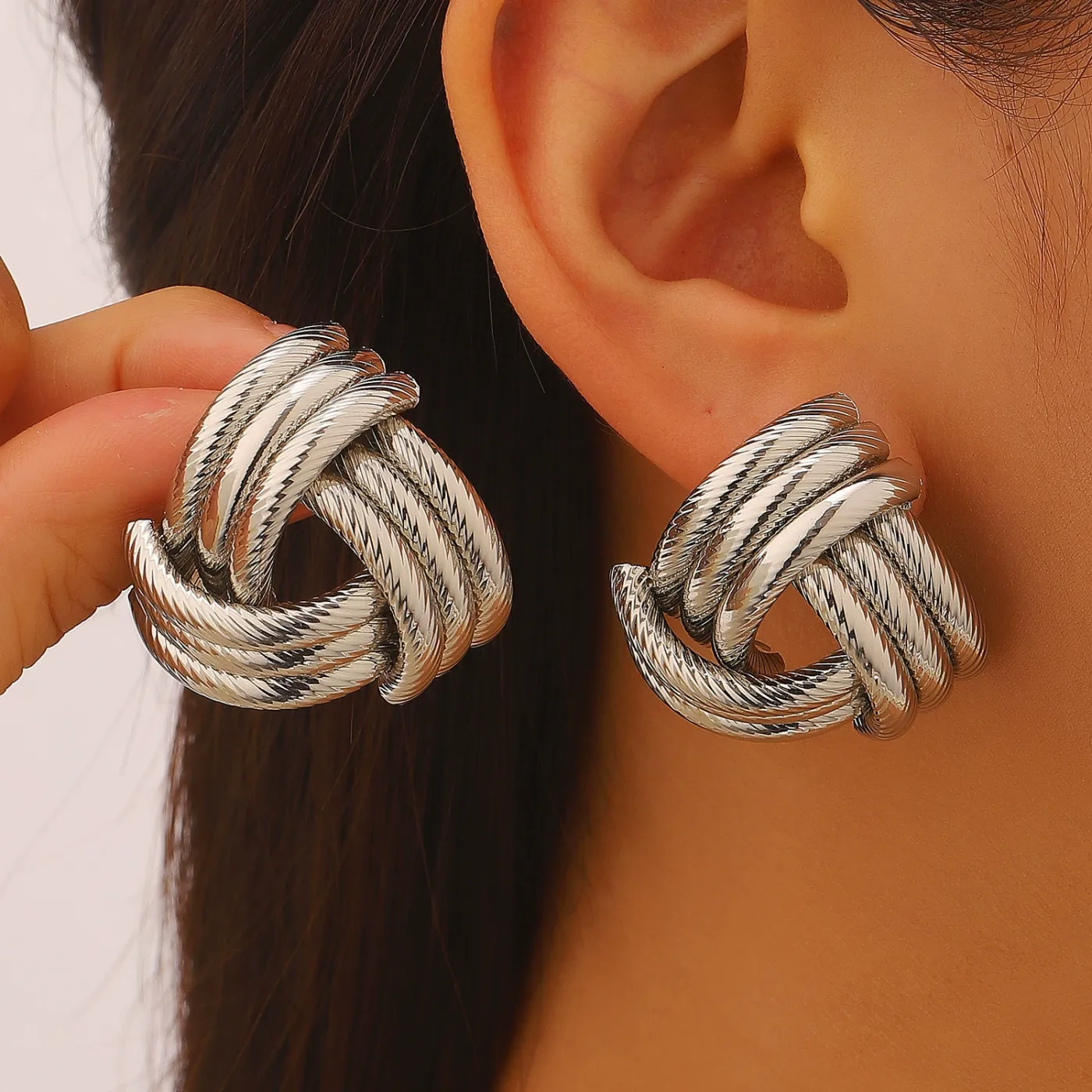
Examples in our catalog: geometric alloy studs, the liquid-metal teardrop arm cuff and the wire-wrapped star and heart bangle.
Brass: the repairable middle ground
Brass — copper and zinc — is the metal our plating shop likes working with. It polishes to a flat, bright surface that plating loves, it holds a thread, and it spin-forms into rings and bands without a mould. If a batch comes back with a finish problem, brass parts are stripped, re-polished and re-plated; alloy parts are not.
- Specify lead-free. Free-machining brass contains lead, and lead in jewelry is restricted in the EU under REACH and capped or warned under state law in the US. Ask for a declaration, not a promise.
- Expect a barrier layer if the piece touches skin for hours at a time; unplated brass also discolours within days of sweat exposure.
- Watch the weight. Brass is noticeably heavier than alloy for the same volume — good for perceived quality, bad for shipping cost per unit.
Copper: soft, cheap and best under enamel
Copper-tone bases are where enamel work looks its best: the metal is soft enough to hold a fired or epoxy enamel edge cleanly, and it takes warm gold tones naturally. It is the reason enamel heart earrings read as "craft" rather than "stamped".
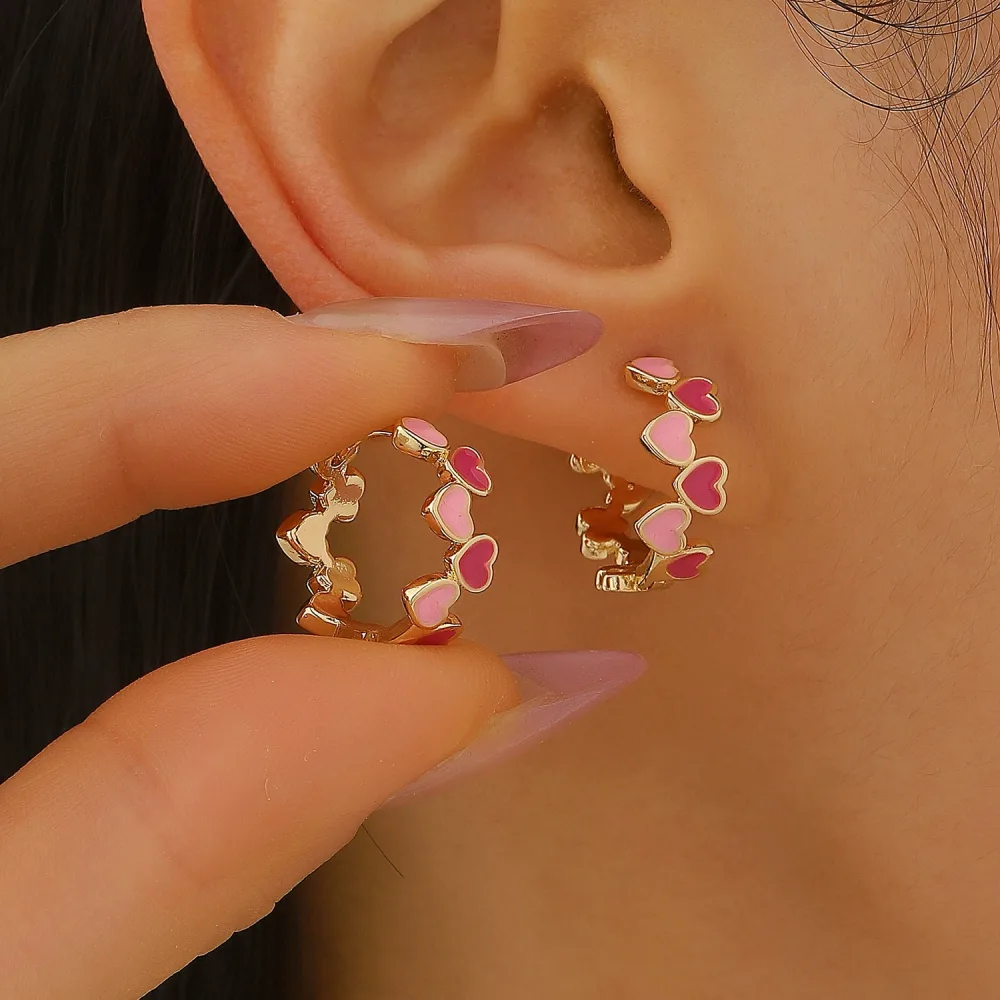
The trade-off is movement and tarnish. Copper is soft, so thin gauges bend, and bare copper turns skin green within a day of wear. On copper-based pieces we insist on a sealed top coat over the plating, and we do not recommend copper at all for pieces marketed as long-wear.
Stainless steel: when durability is the product
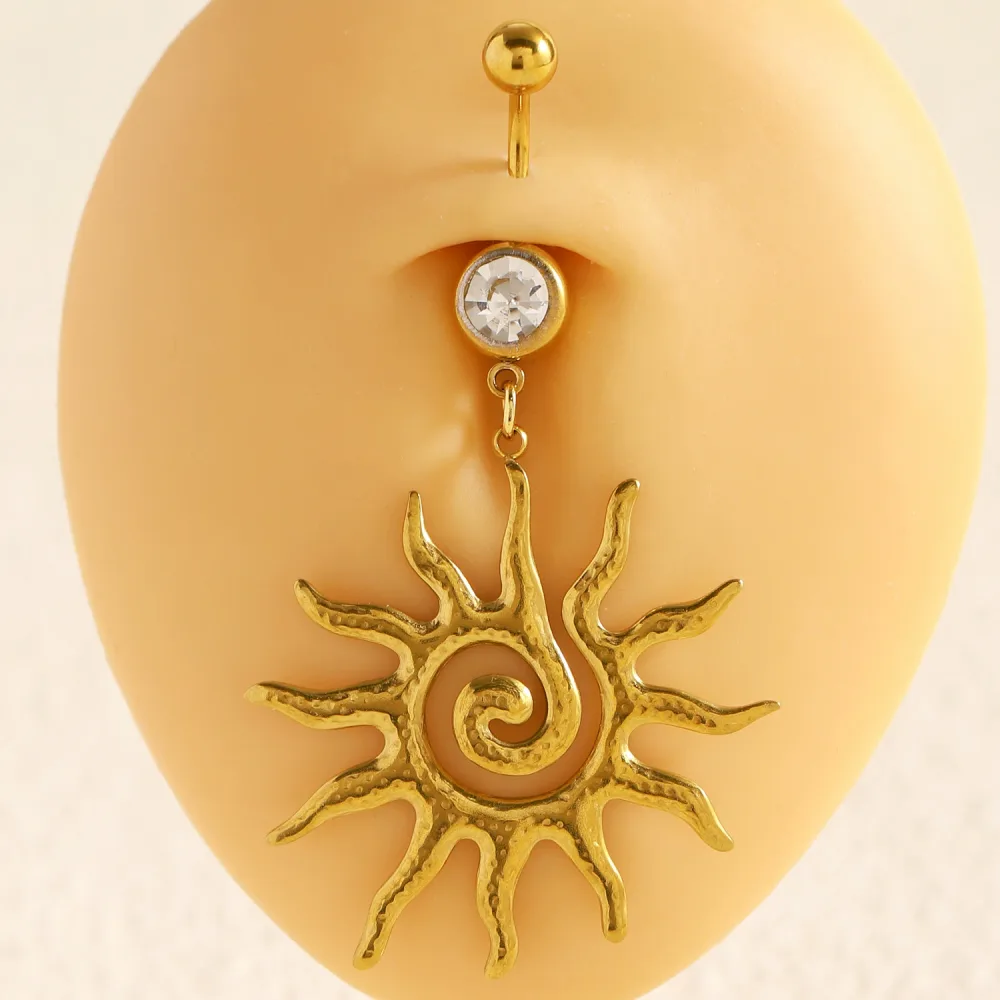
Stainless is the only base metal on this page you can sell as shower-safe. Grade 304 handles daily wear; 316L is the surgical-grade version we use for belly rings and anything that sits in a fresh piercing. Both resist sweat, perfume and chlorine far better than alloy or brass, and both are effectively nickel-immobilised, which is why they pass nickel-release testing with room to spare.
Two limits buyers discover too late:
- Colour comes from PVD, not electroplating. You get gold, rose gold, bronze, gunmetal and black — but the vacuum batch process costs more per piece on small runs and cannot do selective plating on one part.
- No fine cast detail. Stainless is stamped, machined or laser cut. If your design depends on a sculpted 3-D motif, stainless is the wrong metal, and we will tell you so before quoting.
Other stainless pieces in stock: openwork floral studs with natural stones.
Plating: the layer that actually fails
Two identical designs on the same base metal can wear for three months or three years depending on what goes on top. This is the part of the spec worth arguing about.
Electroplating and thickness in microns
Decorative gold tone on fashion jewelry is usually a fraction of a micron. In US labelling practice, "gold electroplated" implies at least 0.5 µm of gold, "heavy gold electroplate" implies 2.5 µm or more, and anything thinner is a flash — which is what most sub-$2 wholesale earrings carry. For reference, 2.5 µm of gold over sterling silver is what legally becomes vermeil; over brass it is just a well-plated fashion piece, and that is a perfectly honest product as long as nobody calls it gold.
PVD (IP) coatings
Physical vapour deposition puts down titanium nitride or similar ceramic colour at roughly 2,000 HV — several times harder than decorative gold plate — which is why PVD stainless survives sweat, sunscreen and daily wear. It is the finish we recommend for any "everyday, don't take it off" positioning. It is not a cheap option on a 100-piece trial run, and it will not rescue a porous alloy casting.
Top coat and e-coat
A clear cathodic electrocoat (e-coat) sealed over the colour is the cheapest durability upgrade in the industry, typically adding weeks of bright wear on alloy pieces. If a supplier cannot tell you whether their gold tone has a top coat, it probably does not.
What to write into your purchase order
Durability is a spec, not a hope. Copy this list into your PO and any serious factory will answer it line by line:
- Base metal and grade (e.g. Zamak 3, lead-free brass, 304 or 316L stainless).
- Plating route and thickness in microns, plus the barrier strike used.
- Top coat: yes or no, and which type.
- Corrosion target: neutral salt spray hours with no base-metal bloom — 24 h is a realistic floor for gold-tone alloy, 48–72 h is a strong spec, and PVD stainless should beat that comfortably.
- Nickel release for skin-contact items: EN 1811 test, 0.5 µg/cm²/week or better; 0.2 for post-piercing items.
- Lead and cadmium declarations for metal parts, per batch.
- QC: AQL 2.5 on finish and stone setting, with a pre-shipment photo report.
Everything we ship is backed by SGS-tested reports covering metal safety, nickel release, plating durability and restricted substances — reports are available per batch, before you commit.
Cost, MOQ and lead time in practice
| Choice | Tooling | Sample | Bulk production | Reorder |
|---|---|---|---|---|
| Alloy, cast design | Low — one mould per design | 5–7 days | 7–12 working days | Fast, mould reused |
| Brass, spun or machined | Low to medium | 5–7 days | 7–12 working days | Easy, re-platable |
| Copper with enamel | Low | 7–10 days | 10–14 working days | Colour match needs a check |
| Stainless, stamped or CNC | Medium to high | 7–10 days | 10–15 working days | Fast once tooled, PVD batch needed |
Custom MOQ is 100 pieces per design, one piece for a sample, and private-label packaging starts at 500. Full detail is on our manufacturing services page, and the custom manufacturing guide walks through what happens between your sketch and a ten-thousand-piece order.
Which metal for which piece
| What you are launching | Use | Skip |
|---|---|---|
| Seasonal or trend drops (Halloween, festival) | Zinc alloy — skull chokers, pumpkin pendants | Stainless: too slow and too costly for a one-season SKU |
| Everyday, shower-safe essentials | 316L or 304 stainless with PVD | Alloy and copper: the finish will not survive the positioning claim |
| Body piercing and navel jewelry | 316L stainless only | Everything else — nickel and porosity risk |
| Stone-set "high jewelry" looks | Brass or alloy casting for the seat, then rhodium-tone plating | Stamped steel: it cannot hold a prong seat |
| Enamel and colour-block pieces | Copper-tone base with sealed enamel | Zamak: enamel edges chip on a brittle casting |
For stone-set work, see the cubic zirconia teardrop earrings; for layered, colour-led pieces, the velvet double-layer choker is the type of design where plating choice makes or breaks the reorder.
Questions buyers ask us
Does stainless steel jewelry tarnish?
Not in the way alloy and brass do. 304 and 316L resist oxidation from sweat and water, so the colour change you see over years is usually the PVD coating slowly wearing at contact points, not the metal corroding.
Is alloy jewelry hypoallergenic?
No, and no responsible factory will print that on a zinc-alloy earring. If your brand is built on sensitive-ear claims, stainless steel is the base and the plating route is PVD.
How long does gold plating last on fashion jewelry?
A flash-plated alloy earring worn daily will dull in weeks. The same design with a proper barrier strike, 0.5 µm of colour and an e-coat top coat holds for a year of regular wear. PVD on stainless outlasts both by a wide margin.
Can I re-plate a piece instead of reordering?
Brass and copper, yes — strip, polish, re-plate. Alloy, rarely: the casting absorbs whatever is left under the old finish and the colour comes back uneven.
What about "waterproof jewelry" claims?
Water is not the problem; soap, chlorine and perfume are. A waterproof claim is only defensible on stainless with PVD and a sealed top coat, and it should be tested, not asserted.
Send us your spec
Tell us the product, the market and how you expect it to be worn — daily, in the shower, or once a season. We will come back within 24 hours with the metal we recommend, the plating route, the test reports and a sample timeline. Use the quote form, or read the sourcing guide first if you are vetting factories rather than materials.